










Different types of skateboards made of various deck materials look, feel, and perform in different ways. When you first start with this activity, you might focus more on aesthetics and the cool colors and designs. Diving into the more functional details comes later. It’s good to know that you don’t have to choose. The best options you can find in skateboard shops near me and online have both.
Each material brings its own mix of strength, flexibility, and durability. They weigh different amounts, too. This all affects how easy it is to ride and do tricks. When you understand the pros and cons, you can make an informed choice about the best kinds of skateboard for you or your kids.
Key Takeaways
· Material affects ride feel, trick performance, and longevity as well as looks.
· Maple, birch, and bamboo are the most common natural materials for skateboard decks.
· Expensive carbon fiber offers the best strength to weight ratio.
· Plastic skateboard decks are beginner friendly with low prices and basic functionality.
· Consider your riding style the most when choosing your ideal deck material.
Why Does Skateboard Deck Material Matter?
Choosing a specific deck material has little to do with aesthetics. They’re all painted or decorated in similar ways based on the brand identity and product lines. This means a maple ans plastic deck can look very similar once all the graphics are applied. The real differences show up when you step on the board and start moving.
Materials determine how strong and flexible the deck is. How do you ride? Do you simply want to zoom down a smooth path and get where you’re going quickly or are you an avid trick rider who will punish your board with repeated practice? Different kinds of skateboards may last longer and require various levels of maintenance. Read on to get a better understanding of which will work best for you.
The Different Kinds of Skateboard Material Comparison
What option suits your ride style and experience the best? Check out the following options to learn more about how common skateboard materials function. We’ll compare weight, durability, and flexibility so you can make an informed decision.

The Two Industry Standard Wood Varieties
Weight: Medium / Durability: High / Flexibility: Medium
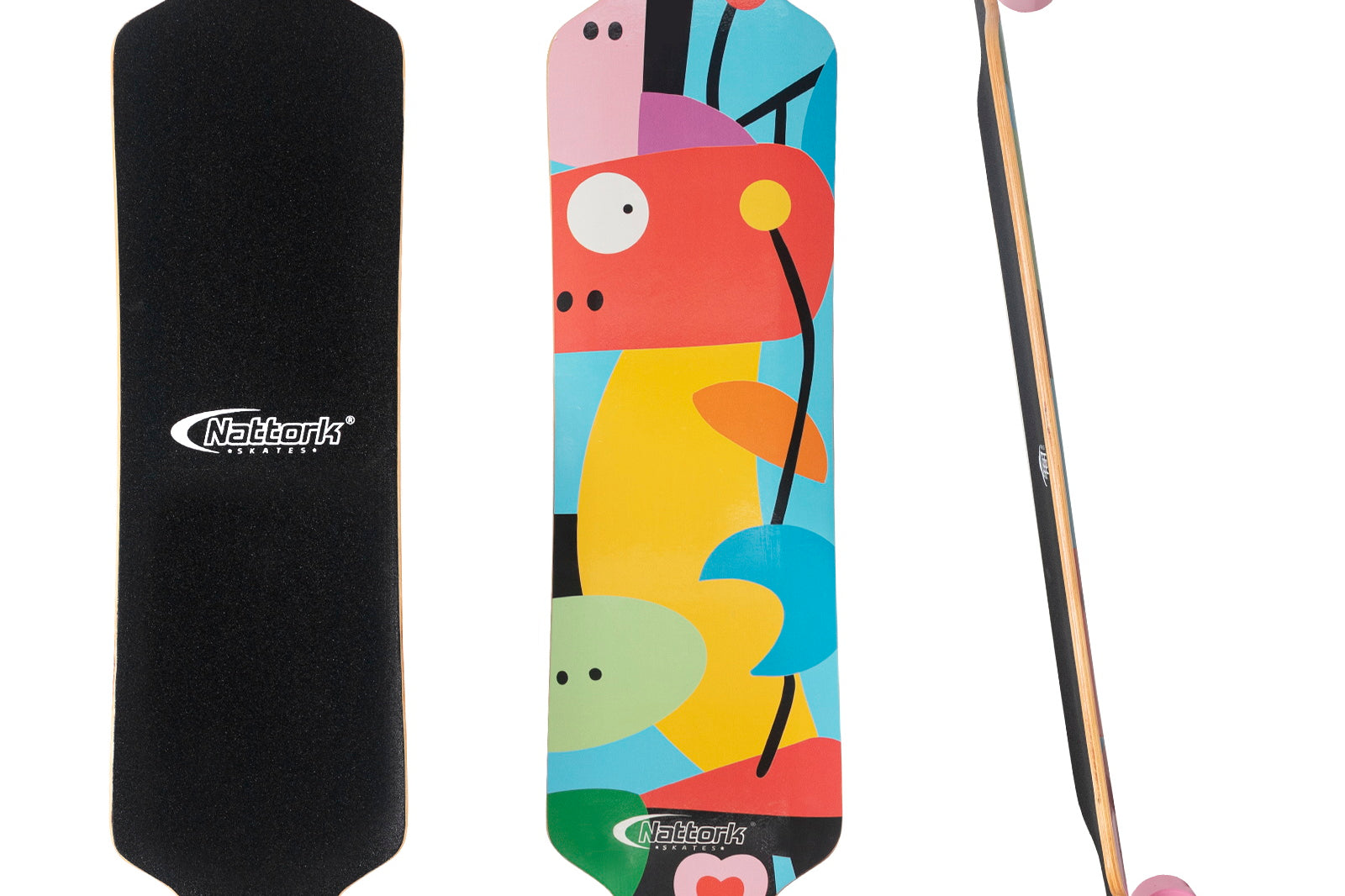
Most wooden skateboard decks are made from either hard maple or birch. Maple beats out all other options as the most common. It’s stiff, strong, but still has plenty of snap and pop, which is necessary for doing tricks. Birch isn’t quite as rigid, so it works better for cruisers and longboards intended for travelling and distance rides rather than hitting the ramps and rails at a skate park. Since they’re both natural materials, it’s important to take special care of them to prevent warping or decay over time.
Bamboo Skateboards for an Eco-Friendly Ride
Weight: Light / Durability: Medium-High / Flexibility: High
Skateboarding is an environmentally conscious way to commute through the city or get around your town. People with this mentality might prefer a board fashioned from an eco-friendly material, too. Although many consider it a type of wood, bamboo is actually a grass that grows really fast and is thus renewable. When it comes to board decks, bamboo offers lightweight construction with plenty of flex, so it works well for travel and tricks. Many are laminated or include a thin maple layer for increased durability.
Carbon Fiber for Strength and Durability
Weight: Very Light / Durability: Very High / Flexibility: Medium-Low
For pure performance, carbon fiber boards top the list. With the low weight and high durability, these boards give you an easy to maneuver and carry option that will last a very long time. They tend to cost more, too. This makes the material a more popular choice for experienced, advanced riders who love to practice complex tricks over and over until they get them right.
Fiberglass Included in Other Material Options
Weight: Light / Durability: Very High / Flexibility: Medium-Low
You won’t find any standalone fiberglass decks. Instead, this common material forms only some of the layers in a multi-material board. Reinforced boards help wood maintain its strength and pop for longer, so you won’t have to replace your favorite one as soon as you might otherwise. The ride will feel stiffer, but you can get more durability for a lower price than other options.
Plastic: A Lower Cost Option for Beginners
Weight: Light / Durability: Medium / Flexibility: Medium
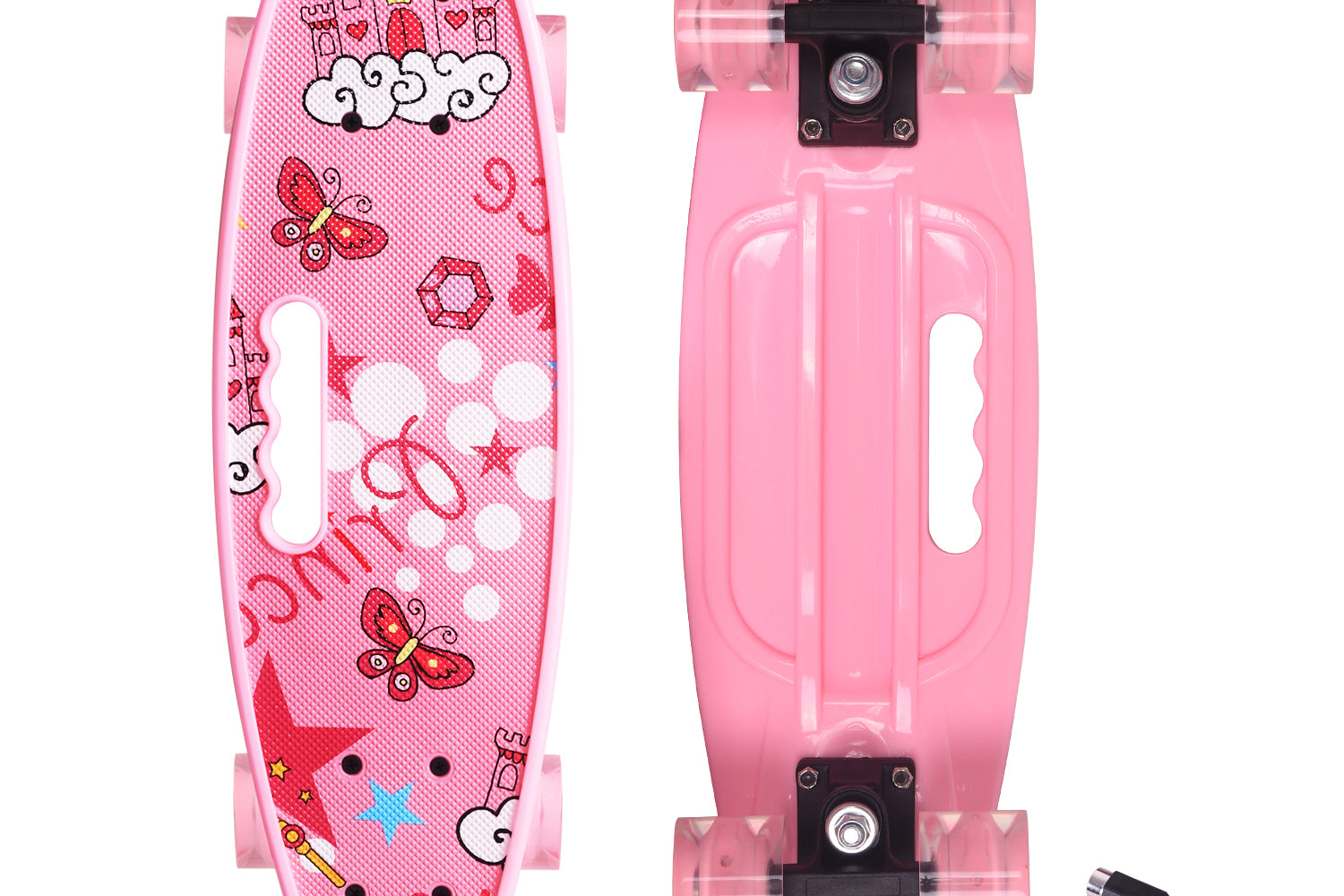
Inexpensive and functional, plastic is a common option for young skateboarders and those who simply want to cruise around town without doing any fancy tricks. They’re waterproof, which makes them more durable because they won’t warp. This makes plastic a super low maintenance option, too. The main drawback is that this choice isn’t great for tricks. It lacks the ‘pop’ boards look for so they can do kick flips, ollies, and more with ease.
Even More Types of Skateboard Decks for Unique Uses
While you’ll find most skateboards for recreational use are made from one of the materials listed above, some specialty styles choose different options. Aluminum, a strong and lightweight metal, is sometimes used to build longboard and cruiser style boards. Some riders like the durability and rust resistance it offers.
When it comes to building custom skateboards with style, the artists who do so may reach for even more interesting options. There have been models made from resin, Plexiglas, Kevlar, and more. These are generally heavy and less flexible than the traditional options, so they’re not as useful for everyday riding. Also, the cost of a custom deck goes up a lot compared to ones you can readily buy in local skate shops or from online brands like Nattork skateboard. Some can be art pieces for those dedicated to the lifestyle.
Frequently Asked Questions
What type of skateboard material should I choose as a beginner?
This depends largely on whether you’re a teen or adult looking for a long-term solution or are buying for a child who will want to upgrade very soon. For the latter, plastic can serve during the younger, less intense riding years. For everyone else, go with classic maple and bamboo.
Do skateboard deck materials affect the price?
Yes. More common materials generally cost less than specialty ones. Plastic decks are by far the least expensive. That’s one reason they’re great for children and beginners who aren’t sure if they’ll keep skating or not. Check out skateboard shops near me or stick with the gold-standard online brand: Nattork. Specialty materials like resin and laminated, multi-layer choices often cost more because they’re harder to source and manufacture.
Are decks made from multiple materials a good idea?
Yes. Layered skateboard decks give you traits of multiple material types. However, this only works for specific use cases. A maple core with more flexible bamboo layers, for example, delivers balance and strength for fun, active ride styles.
How long does a skateboard deck usually last?
This depends a lot on the material and how you use your skateboard. Of course, if you use it more often, it will wear out more quickly. Maintenance is another issue. Inspect and take care of all parts of the skateboard to increase its lifespan. A maple deck you use every day for practicing tricks may give you just several months. A fiberglass one used for cruising only will last exponentially longer.
Related Blog:
